
The sameness problem behind those unappetizing AI-generated menus
You pick up a menu, glance at the food photography, and something feels off — not wrong enough to name, just wrong enough to make you put the menu down. The sameness problem behind those unappetizing AI-generated menus is now real enough that customers are noticing it viscerally, even when they can'

```html
The sameness problem behind those unappetizing AI-generated menus
You pick up a menu, glance at the food photography, and something feels off — not wrong enough to name, just wrong enough to make you put the menu down. The sameness problem behind those unappetizing AI-generated menus is now real enough that customers are noticing it viscerally, even when they can't explain what they're seeing. This is not a niche design complaint. It's a signal about how generative AI fails when deployed without craft, context, or restraint — and it has implications that stretch well beyond the restaurant industry.
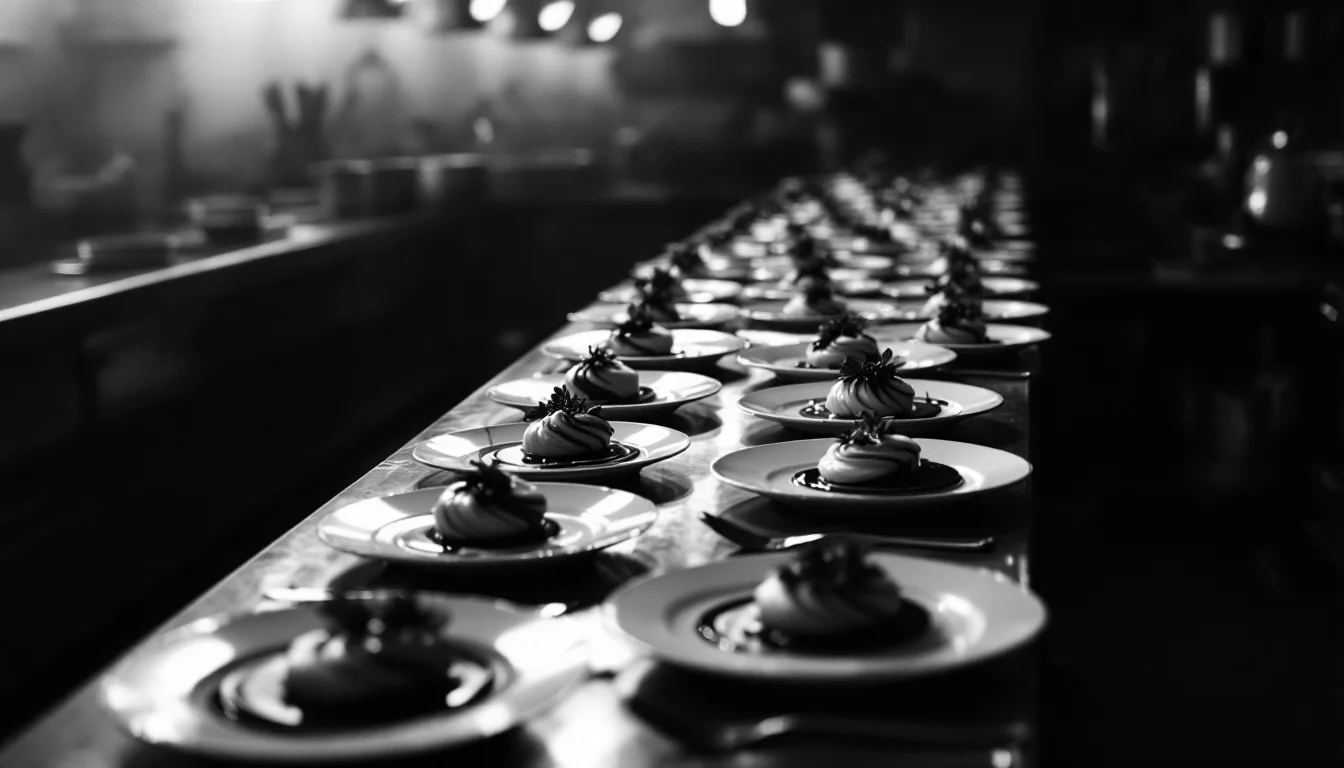
According to TechCrunch's Amanda Silberling, AI-generated menu illustrations have started appearing across cafes and restaurants at scale. The images are technically competent — precisely symmetrical, oddly smooth, eerily flawless — but they trigger an immediate sense that something is wrong. Reality Defender CTO Alex Lisle put it bluntly: "It's almost like an alien trying to make a pizza without understanding its core principles." Some images are obviously fake, like a burrito with cheese so bubbly and melty it reads as avant-garde art. Others are subtle enough that you only catch the wrongness on a second look. Either way, the effect is the same: distrust.
What Happened
Restaurant owners started turning to generative AI as a shortcut for menu design. The economics make sense on paper — commissioning a food photographer is expensive, and a text-to-image model can produce a dozen menu illustrations in minutes for near-zero marginal cost. The problem is that these models were trained on a narrow aesthetic of "pleasingness" — a statistical average of what food photography looks like across millions of images scraped from the web. The result is images that optimize for surface-level appeal while stripping out the imperfections that make food look real: the slightly uneven char on a pizza crust, the way sauce pools asymmetrically, the honest messiness of an actual sandwich.
Social media users started flagging the phenomenon in posts that went viral, pointing out menus where the food looked more like a render from a video game than something a kitchen could actually produce. The illustrations weren't offensive — they were just uncanny. And that uncanniness is the point. Customers didn't need an AI-detection tool to sense something was off. They just knew.
This is the core failure mode: generative AI, when applied without domain knowledge or human editorial judgment, converges on a mean. It produces outputs that are statistically likely rather than genuinely good. In food photography, that convergence produces images that look like every other AI food image — smooth, symmetrical, and ultimately unappetizing precisely because they're too perfect. The sameness is the problem. Not the AI itself.
It's worth noting that AI-detection startups like Reality Defender now exist specifically because of this dynamic. A market for content-verification tools has emerged in parallel with the proliferation of AI-generated content — a secondary industry built on the trust deficit that careless AI deployment creates.
Why It Matters for Asia
Asia's food and beverage industry is enormous, fragmented, and deeply visual. From hawker stall operators in Singapore building their first digital menus, to mid-size restaurant chains in Jakarta or Ho Chi Minh City scaling across delivery platforms, the pressure to produce high-quality visual content cheaply is intense. The temptation to reach for an AI image generator is completely understandable.
But the sameness problem hits harder in Asia's food culture than it might in other markets. Food here is identity. A bowl of bak kut teh, a plate of char kway teow, a proper bowl of tonkotsu ramen — these dishes carry regional pride, family history, and local specificity. An AI model trained primarily on Western food photography datasets will not understand that the right amount of wok hei on a plate of fried rice is visible in the char, not in a smooth golden glow. It will produce something that looks vaguely like fried rice the way a stock photo looks vaguely like a real place — technically accurate, emotionally hollow.
For Asian founders building in the food-tech space — delivery platforms, restaurant management SaaS, digital menu tools — this is a product design problem, not just an aesthetics problem. If your platform generates AI visuals for merchants, and those visuals erode customer trust, your platform carries that reputational cost. The merchant blames the food. The customer blames the restaurant. But the platform enabled it.
There's also a broader Asia tech trend at play here. As AI tooling becomes cheaper and more accessible, the differentiation between products will increasingly come down to taste — not just technical capability. Any developer can call an image generation API. The question is whether your product applies enough domain knowledge, enough cultural context, and enough human oversight to produce outputs that are actually good rather than merely adequate. That's a product judgment call, and it matters more in markets where the content being generated carries cultural weight.
What This Means for Developers
The menu problem is a useful case study for any developer building AI-powered content generation into a product. The failure pattern is consistent: take a general-purpose model, apply it to a domain-specific problem, skip the fine-tuning and human review steps, and ship. The output will be technically functional and aesthetically mediocre. Users will notice, even if they can't articulate why.
A few concrete lessons worth internalizing:
- General-purpose models are starting points, not endpoints. A text-to-image model trained on broad web data will produce broadly average outputs. If your use case requires cultural specificity — and most Asian market use cases do — you need either fine-tuning on domain-relevant data, or a human editorial layer that filters and curates outputs before they reach users.
- Uncanny valley effects are not limited to faces. The original uncanny valley concept applied to humanoid robots that looked almost-but-not-quite human. The same perceptual mechanism applies to food, to writing, to UI copy, and to any domain where humans have deep intuitive knowledge of what "right" looks like. If you're generating content in any of these domains, test it with real users from the target culture — not just internal reviewers.
- Sameness is a systemic risk, not a one-off bug. When every restaurant using your platform generates menus from the same underlying model with the same default settings, the outputs will converge. Customers who eat at multiple restaurants will start to notice. The sameness becomes a signal that something is automated, and automated starts to mean untrustworthy. Build variation and customization into your generation pipeline from day one.
- Trust is harder to rebuild than it is to lose. The restaurants that adopted AI menu images early are now dealing with a reputational signal they didn't anticipate. For developers building platforms, the lesson is that shipping fast with AI-generated content is only low-risk if the content quality is genuinely high. Otherwise, you're borrowing against your users' trust.
On the infrastructure side, developers building on MonstarX can layer human review checkpoints directly into AI content generation workflows — treating the AI output as a draft that passes through a validation step before it surfaces to end users, rather than shipping raw model output directly. That architectural decision — AI generates, human (or a tighter, fine-tuned model) reviews — is the difference between the uncanny and the credible.
It's also worth thinking about how your product's templates and default configurations shape what users produce. If your platform ships with a single default style for AI-generated food imagery, you're baking the sameness problem into your product. Giving merchants the ability to anchor generation to their own reference photos, their own brand palette, and their own regional food context is not just a feature — it's a trust mechanism.
Key Takeaways
The AI-generated menu problem is small in scale but large in implication. It illustrates, clearly and visually, what happens when AI is deployed as a cost-cutting shortcut rather than as a tool that requires domain expertise, cultural context, and human judgment to use well.
- Generative AI converges on statistical averages. In creative domains, averages are mediocre — and users can feel mediocrity even when they can't name it.
- Asia's food culture is too specific, too regional, and too emotionally loaded for generic AI outputs to work without significant customization.
- For developers, the menu problem is a proxy for a broader challenge: any AI-generated content that lacks domain grounding will produce outputs that erode user trust over time.
- The fix isn't to avoid AI — it's to treat AI output as a first draft, not a finished product. Build review, variation, and cultural context into the pipeline.
- Platforms that enable merchants to generate content bear some responsibility for the quality of that content. Shipping the capability without the guardrails is a product decision with downstream reputational costs.
The restaurants that will get this right aren't the ones that stop using AI — they're the ones that stop using AI carelessly. The same logic applies to every developer building AI-powered products for Asian markets: the technology is available to everyone, which means the only durable advantage is knowing how to use it with enough taste, specificity, and restraint that your outputs don't all look like they came from the same alien trying to make a pizza.
```