
SoftBank’s CEO isn’t the only one with questions about Elon Musk’s orbital data center hype
Masayoshi Son has invested in some of the most audacious bets in tech history, so when SoftBank's CEO isn't the only one with questions about a proposal, that's worth paying attention to. The proposal in question: Elon Musk's vision for orbital data centers — computing infrastructure launched into s

```html
SoftBank's CEO isn't the only one with questions about Elon Musk's orbital data center hype
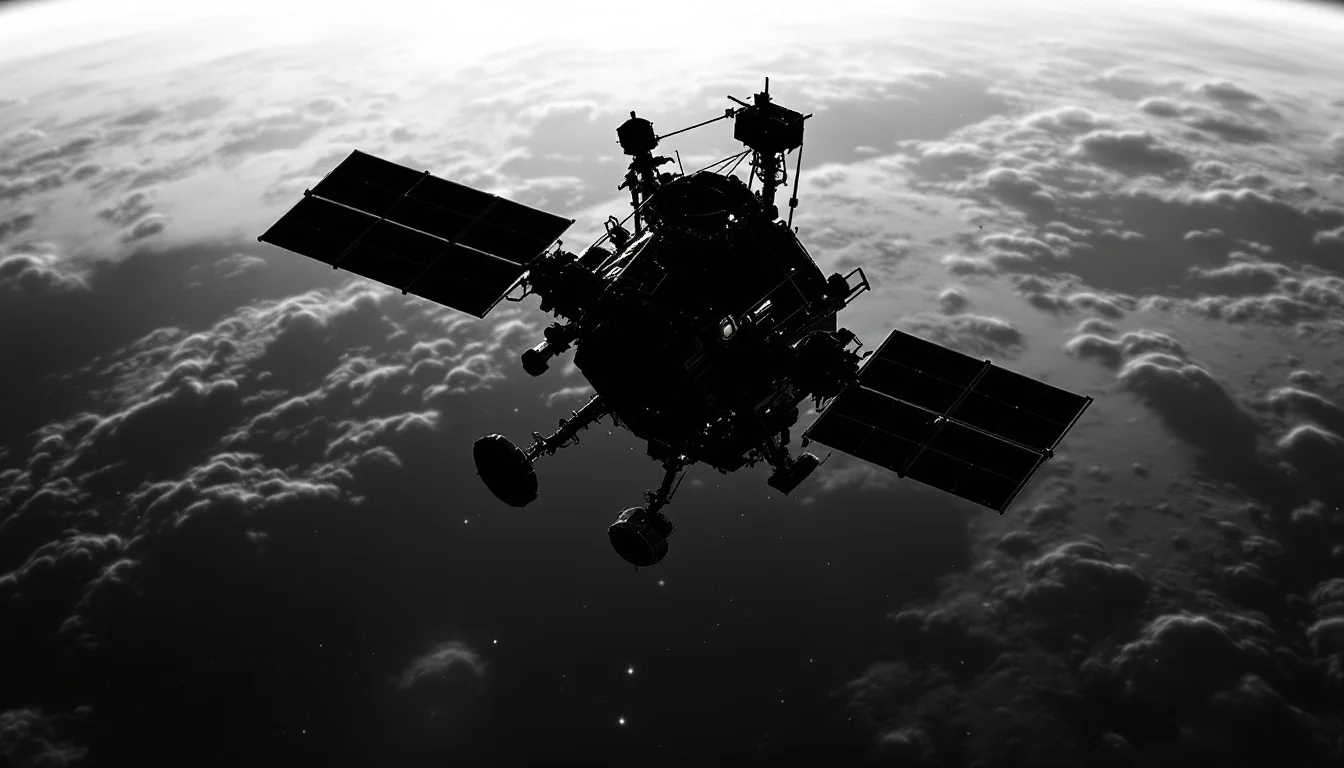
Masayoshi Son has invested in some of the most audacious bets in tech history, so when SoftBank's CEO isn't the only one with questions about a proposal, that's worth paying attention to. The proposal in question: Elon Musk's vision for orbital data centers — computing infrastructure launched into space to power the next generation of AI workloads. It sounds like science fiction, and increasingly, serious people in the industry are treating it that way. For developers and founders across Asia building real products on real infrastructure today, the gap between orbital ambition and ground-level reality has never felt wider.
What Happened
According to TechCrunch's reporting from June 27, 2026, Masayoshi Son — the SoftBank Group CEO whose firm has committed billions to AI infrastructure plays — has publicly raised doubts about the feasibility and logic of Elon Musk's orbital data center concept. And Son isn't alone. The broader tech and investment community is asking the same hard questions: What problem does putting compute in orbit actually solve? How do you cool a data center in space? What does latency look like when your GPU cluster is orbiting at 400 kilometers above the Earth's surface? What happens when a satellite fails mid-training run?
The orbital data center idea sits at the intersection of two things Musk controls: SpaceX's launch capabilities and xAI's appetite for massive compute. The pitch, broadly, is that space-based infrastructure could bypass terrestrial constraints — land costs, power grid limitations, regulatory friction. On paper, it's a compelling unlock. In practice, the engineering and economic challenges are staggering. Radiation hardening of GPU hardware alone is a multi-billion-dollar materials science problem. Maintenance windows don't exist when your rack is in low Earth orbit. And the energy economics of beaming power to orbital compute and then transmitting results back to Earth have not been publicly demonstrated at any meaningful scale.
What makes this moment notable isn't just that Son raised an eyebrow. It's that the skepticism is coming from someone who has historically been willing to fund the wildest possible version of a technology thesis. When Masayoshi Son asks "but does this actually work," the industry listens differently than when a cautious analyst does.
Why It Matters for Asia
Asia's AI infrastructure story is moving fast, but it's moving on the ground. Japan, South Korea, Singapore, India, and increasingly Vietnam and Indonesia are all in active races to build out domestic AI compute capacity. SoftBank itself has been a central player in that buildout — investing in data center construction, domestic GPU procurement, and sovereign AI initiatives across the region. The orbital data center narrative, if it gained mainstream investment momentum, would represent a direct distraction from that ground-level work.
There's a more subtle risk too. Asia tech has always had to navigate the gap between Silicon Valley hype cycles and the infrastructure realities of building in emerging markets. When a narrative like orbital compute dominates global headlines, it shapes where capital flows, what gets funded, and what kinds of infrastructure proposals get taken seriously in boardrooms from Tokyo to Jakarta. Founders in Southeast Asia pitching practical, high-density terrestrial data center expansions suddenly have to compete for attention against orbital moonshots backed by the world's most famous entrepreneur.
The counterargument — and it's a real one — is that Asia's developers stand to benefit if orbital compute ever does become viable. Latency-neutral compute that doesn't require massive land acquisition could theoretically democratize AI infrastructure access across geographies that currently lack the grid capacity or real estate density to host hyperscale facilities. Countries like the Philippines, Bangladesh, or Myanmar, where terrestrial infrastructure buildout faces genuine constraints, could theoretically access compute from orbit without building a single new power substation.
But "theoretically" is doing a lot of work in that sentence. And in the meantime, the AI workloads that Asian developers are shipping today — recommendation engines, language models fine-tuned on regional datasets, computer vision pipelines for manufacturing and logistics — need infrastructure that exists right now, not infrastructure that might launch in 2031.
What This Means for Developers
If you're a developer or technical founder in Asia, the orbital data center debate is a useful forcing function for a question you should already be asking: how tightly coupled is your AI stack to infrastructure decisions made by a small number of Western hyperscalers and visionaries?
The practical answer for most teams is: more tightly coupled than you'd like. The majority of AI workloads in the region run on AWS, GCP, or Azure — infrastructure whose roadmaps are set in Seattle, Mountain View, and Redmond. When Elon Musk floats an orbital compute vision and it captures global attention, it shapes the R&D priorities of chip designers, cloud architects, and infrastructure investors in ways that eventually trickle down to the APIs and instance types available to a startup in Ho Chi Minh City or Bangalore.
The more immediate and actionable insight is about abstraction layers. The developers who are least exposed to infrastructure hype cycles are the ones who've built their AI applications against clean, portable interfaces rather than vendor-specific primitives. If your inference pipeline is tightly coupled to a specific cloud provider's proprietary serving format, you're one pricing change or geopolitical disruption away from a painful migration. If it's abstracted behind a well-defined interface, you have options.
This is part of why platforms like MonstarX — built from the ground up for Asian developers — emphasize infrastructure portability as a first-class concern. The ability to swap underlying compute providers without rewriting your application logic isn't a nice-to-have when you're operating in a region where cloud pricing, data residency requirements, and infrastructure availability vary dramatically across markets.
There's also a signal-to-noise problem worth naming directly. The orbital data center story will generate hundreds of articles, podcast episodes, and investor memos over the next 12 months. Most of them will be speculative. The developers who ship the most in that period will be the ones who tuned out the noise and stayed focused on the infrastructure that's actually available to them today — and on building applications that deliver value to real users in real markets.
That's not a call for conservatism. It's a call for precision. Know which bets are worth tracking because they'll affect your stack in the next 18 months, and which ones are worth filing under "interesting if true, irrelevant if not." Orbital compute is firmly in the second category for any team shipping production AI in Asia right now.
Key Takeaways
A few things worth holding onto from this story:
- Skepticism from credible optimists matters. Masayoshi Son has funded some of the most aggressive technology bets of the last two decades. His public questions about orbital compute aren't the reflexive caution of a conservative investor — they're a signal that the engineering and economic case hasn't been made convincingly, even to people who want to believe.
- Infrastructure hype has real costs. Capital and engineering talent are finite. Every dollar and every brilliant engineer pulled toward an unproven orbital compute thesis is a dollar and an engineer not working on the terrestrial AI infrastructure that Asian markets actually need right now — better regional GPU availability, lower-latency inference endpoints, more affordable fine-tuning capacity for non-English language models.
- Asia's AI buildout has its own logic. The infrastructure priorities that make sense for a hyperscaler trying to serve a global market from a handful of mega-regions are not the same priorities that make sense for a startup trying to serve users in Southeast Asia with low-latency, data-resident AI applications. The orbital compute debate is largely a conversation about the former. Asian developers should stay focused on the latter.
- Abstraction is your hedge. You cannot control whether Elon Musk launches a data center into orbit, whether SoftBank funds it, or whether it changes the global compute landscape in five years. You can control how tightly your application is coupled to any single infrastructure provider's roadmap. Build for portability. The developers who do that consistently are the ones who survive every hype cycle — orbital or otherwise.
- The questions Son is asking are the right questions. Cooling, latency, hardware resilience, energy economics, maintenance — these aren't nitpicks from people who lack vision. They're the engineering fundamentals that determine whether a technology becomes infrastructure or remains a concept. No amount of launch capability changes the physics of running a GPU cluster in a radiation environment with no maintenance access.
The orbital data center story will keep moving. SpaceX will likely run some kind of demonstration. Analysts will publish competing models of the economics. Musk will post something provocative. Son may or may not get clearer answers to his questions. Watch it — but don't let it distract you from the infrastructure decisions that actually affect what you ship next quarter. The most durable competitive advantage in AI development has never been access to the most exotic compute. It's been the discipline to build well on the compute that exists.
```