
OpenAI’s new AI smart speaker will reportedly sell for between $300 and $400
A donut-shaped speaker with moving parts, built from premium metal, designed by the man who gave us the iPhone — and priced somewhere between $300 and $400. That's the picture emerging around OpenAI's first hardware device, and it's already raising more questions than it answers. OpenAI's new AI sma

OpenAI's new AI smart speaker will reportedly sell for between $300 and $400
OpenAI's new AI smart speaker will reportedly sell for between $300 and $400
A donut-shaped speaker with moving parts, built from premium metal, designed by the man who gave us the iPhone — and priced somewhere between $300 and $400. That's the picture emerging around OpenAI's first hardware device, and it's already raising more questions than it answers. OpenAI's new AI smart speaker will reportedly sell at a price point that puts it well above anything Amazon has shipped, and the company is betting that a deeper ChatGPT integration into daily life justifies the premium. For developers and founders across Asia watching the AI hardware race accelerate, this announcement deserves more than a passing glance.
What Happened
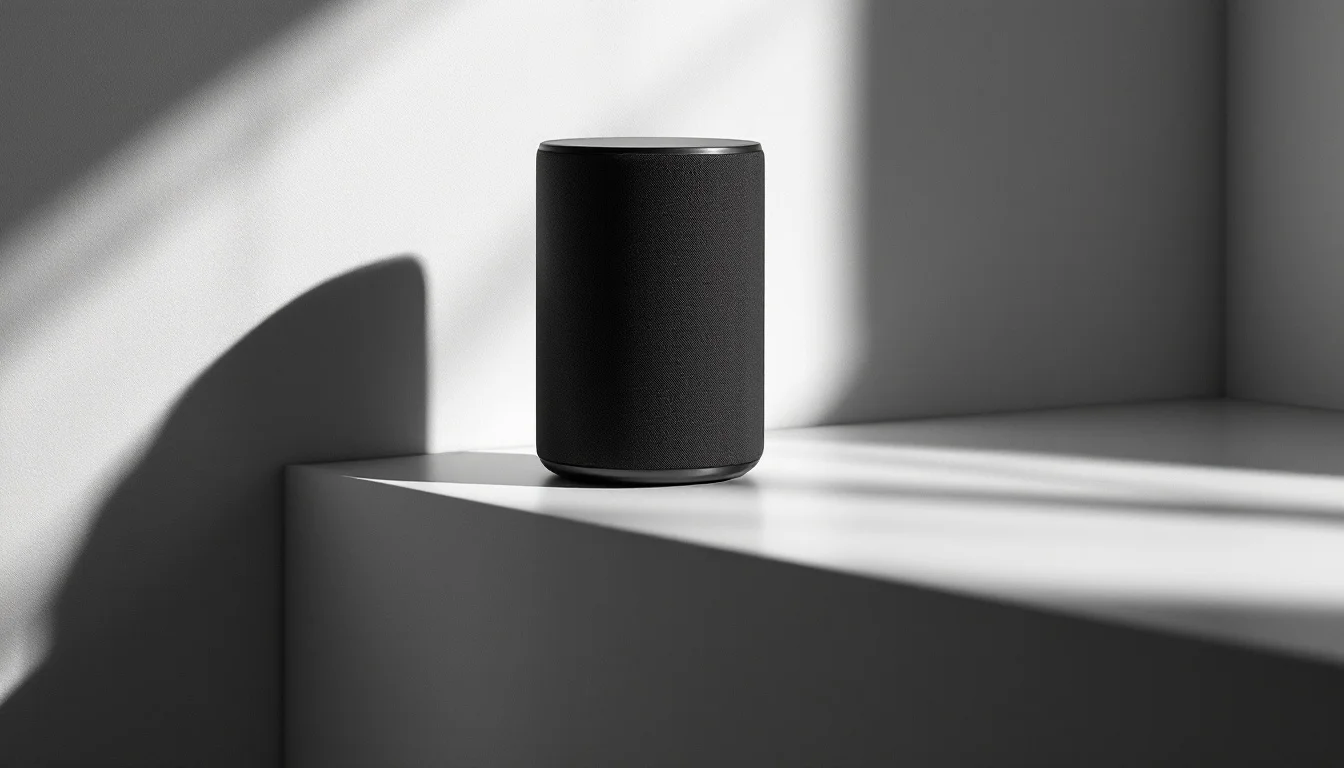
Details about OpenAI's upcoming hardware device have been trickling out for weeks, but a new Bloomberg report published on August 6, 2026 added the sharpest picture yet. According to TechCrunch's coverage of the Bloomberg report, the device is described as "donut-shaped," constructed from "high-quality metal," and will feature a "premium look" along with — in a detail that still defies easy explanation — distinct "moving parts."
The form factor is intentional. The donut shape is designed to let users carry the device around their home and set it down in different spots: a bedside table, a kitchen counter, a living room shelf. The goal, as Bloomberg framed it in an earlier report, is for this device to be the "physical manifestation" of ChatGPT — an always-present, ambient AI companion rather than a stationary appliance you walk up to and bark commands at.
On pricing, the Bloomberg report puts the device somewhere in the $300 to $400 range. For context, Amazon's Echo lineup spans roughly $40 to $240. OpenAI is not playing in the budget tier. The device is being developed in partnership with LoveFrom, the design studio founded by Jony Ive — the designer behind the iMac, iPod, and iPhone during his decades at Apple. A release date of sometime in 2027 is the current expectation.
There's also legal turbulence in the background. Apple has sued OpenAI, alleging trade secret theft related to the hardware project. OpenAI has denied wrongdoing. The lawsuit adds an unpredictable variable to an already ambitious timeline.
Smart speakers as a category have a complicated financial history. As TechCrunch notes, they have not always been profitable even for Amazon, which has shipped tens of millions of Echo units. OpenAI is walking into a market where the incumbent bled money for years before finding a sustainable model — and it's doing so at a price point that narrows its potential audience significantly.
Why It Matters for Asia
Asia is not a monolith, but across Southeast Asia, Japan, South Korea, and India, a few consistent patterns define how AI hardware lands in these markets — and they matter a lot when evaluating whether a $300–$400 OpenAI speaker has legs here.
First, price sensitivity. In markets like Vietnam, Indonesia, Thailand, and the Philippines, consumer electronics adoption is heavily driven by mid-range pricing. A $300 device sits in a range that most households would classify as a considered purchase, not an impulse buy. Compare that to South Korea and Japan, where premium hardware has historically found receptive audiences — Sony, Samsung, and Apple all command strong pricing power in those markets. OpenAI's device will likely find its earliest Asian traction in the premium consumer segments of Tokyo, Seoul, and Singapore before it touches mass-market adoption elsewhere in the region.
Second, the ambient AI angle is genuinely interesting for Asia. Smart home penetration in cities like Shenzhen, Jakarta, and Bangalore has been growing steadily, and the concept of a conversational AI device that lives in your home — rather than sitting in your pocket — aligns with how many urban households in Asia are already using voice assistants. The difference is that ChatGPT's underlying capabilities are meaningfully more sophisticated than what Alexa or Google Assistant delivered at launch. If OpenAI can deliver on the "AI companion" promise with low latency and strong multilingual support, that changes the calculus.
Third — and this is the part that should interest founders — the device signals where OpenAI sees the next frontier of user engagement. It's not just about the API anymore. OpenAI wants to own the ambient layer of daily life. For Asian startups building on top of OpenAI's models, that's both an opportunity and a competitive signal. The platform layer is moving closer to the physical world, and the companies that understand that shift early will have an edge.
Analysis: The multilingual capability of this device will be a make-or-break factor for Asian markets. If OpenAI ships a device that handles English fluently but stumbles on Bahasa Indonesia, Tamil, or Tagalog, its addressable market in SEA shrinks dramatically. This is an area worth watching closely as 2027 approaches.
What This Means for Developers
Hardware announcements from AI labs are rarely just about the hardware. They're architecture announcements. When OpenAI ships a physical device designed to be the ambient presence of ChatGPT in someone's home, it's telling developers something important about where the interaction layer is heading.
Right now, most developers building on top of OpenAI's models think about interfaces in one of two ways: a chat UI in a browser, or an API call embedded in an app. The smart speaker changes that mental model. Voice-first, context-persistent, ambient interaction is a different design paradigm — and developers who want to build experiences that complement or extend this device will need to think differently about state management, conversation continuity, and low-latency response design.
For developers in Asia specifically, a few immediate implications stand out:
- Voice interface design becomes a first-class skill. If ambient AI devices gain traction, the ability to design and build compelling voice-first experiences will be increasingly valuable. This is a gap in most Asian dev teams today — not because the talent isn't there, but because the demand hasn't been urgent enough to force it.
- Local language model fine-tuning matters more than ever. An ambient home device that can't handle code-switching between English and a local language — something extremely common across SEA — will feel broken to users. Developers who have invested in multilingual model work are ahead of this curve.
- Integration architecture is the real opportunity. The device itself is hardware. The value layer is what you connect to it. Developers who can build compelling connectors between ambient AI devices and local services — ride-hailing, food delivery, healthcare, fintech — will be building genuinely differentiated products.
- Privacy and data residency concerns will shape adoption. Several Asian markets, including India, Indonesia, and Vietnam, have active data localization regulations or are moving toward them. A device that sends ambient home audio to OpenAI's servers raises real compliance questions that developers building on top of this platform will need to navigate carefully.
The broader pattern here is one that developers on MonstarX — Asia's AI-native dev platform — are already navigating: AI is moving out of the browser tab and into the physical environment. The developers who treat that as a distant concern will be playing catch-up. The ones who start prototyping voice-first, context-aware experiences now will have a meaningful head start when the hardware actually ships.
It's also worth noting what this device is not. It has no screen. That's a deliberate design choice, and it has real implications for how developers think about output modalities. You can't fall back on a card UI or a data table. Every response has to work as spoken language. That constraint is creatively demanding — and it's exactly the kind of constraint that separates thoughtful AI product design from a wrapper around a chat completion endpoint.
Key Takeaways
The core facts are straightforward: OpenAI is building a donut-shaped, screenless, premium AI speaker in partnership with Jony Ive's LoveFrom studio. It will reportedly sell for $300 to $400. It's expected sometime in 2027. It has moving parts. It's designed to live in your home and be the physical presence of ChatGPT.
But the implications run deeper than the spec sheet:
- OpenAI is making a serious bet on ambient AI. This isn't a novelty product. It's a strategic move to own the home interaction layer — the same layer Amazon and Google have been fighting over for a decade, but now with a dramatically more capable AI underneath.
- The price point is a market signal, not just a number. At $300–$400, OpenAI is targeting early adopters and premium consumers, not mass-market households. In Asia, that means the device will land first in the high-income urban segments of Japan, South Korea, and Singapore. Mass-market SEA adoption is a later chapter.
- Developers should start thinking about voice-first design now. The device won't ship until 2027, but the architectural thinking required to build great experiences for it is work that takes time. Waiting until the hardware is in hand is too late.
- Multilingual capability will determine Asian market success. OpenAI's ability to handle the linguistic diversity of Asia — not just Mandarin and Japanese, but Bahasa, Tamil, Tagalog, Vietnamese, and the dozens of other languages spoken across the region — will be the single biggest factor in whether this device achieves meaningful penetration beyond the premium tier.
- The legal overhang is real. Apple's lawsuit over alleged trade secret theft adds genuine uncertainty to the timeline and the product's final form. This is worth tracking as 2027 approaches.
Smart speakers have historically been a graveyard of ambitious hardware bets — even Amazon, with its massive distribution advantage, took years to find a profitable model. OpenAI is entering this market with better AI and worse hardware experience than any of its predecessors. Whether that trade-off pays off will depend less on the donut shape or the moving parts, and more on whether the intelligence inside it is genuinely useful enough to justify the price — and whether OpenAI can make that intelligence feel at home in the linguistic and cultural reality of the world's most diverse continent.