
OpenAI’s Jalapeño chip is Big Tech’s spiciest move away from Nvidia
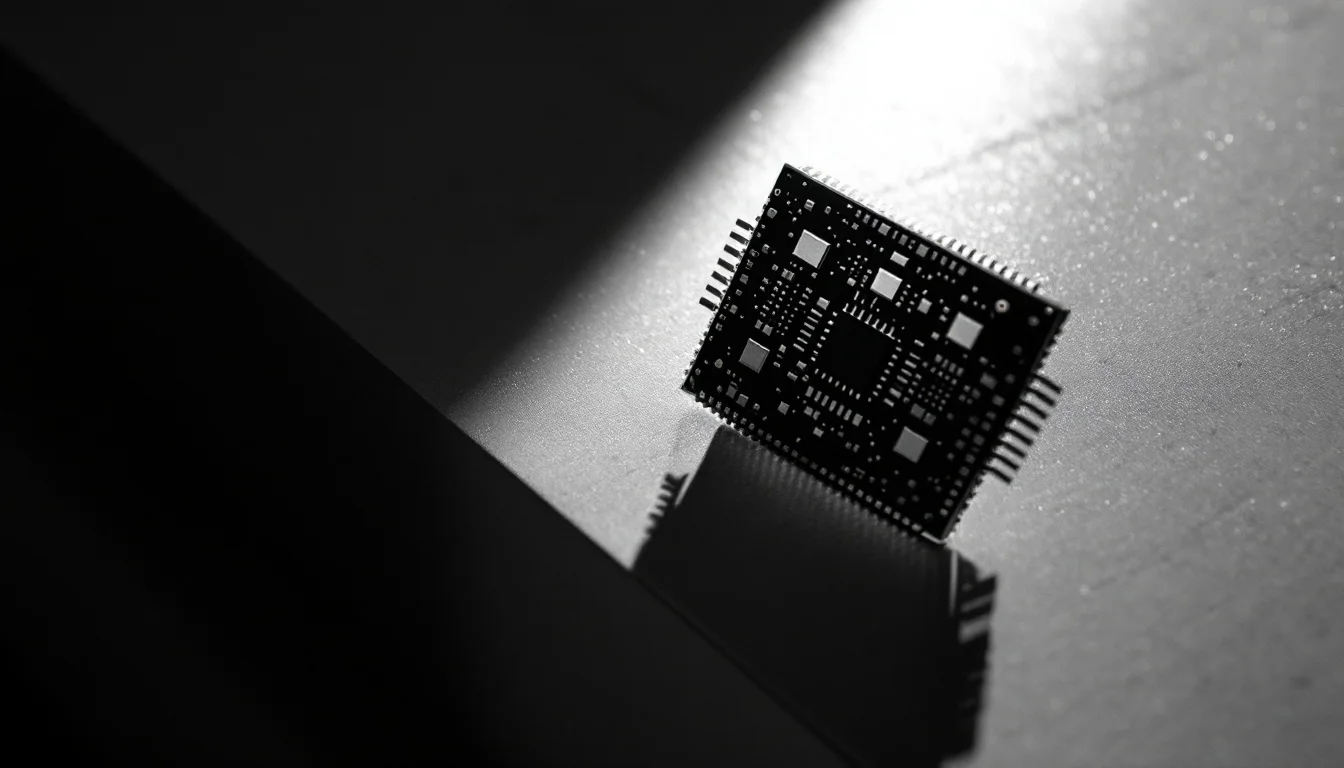
OpenAI just revealed Jalapeño — a custom inference chip built in partnership with Broadcom — and it's the clearest signal yet that the AI industry's dependence on a single silicon supplier is cracking. OpenAI's Jalapeño chip is Big Tech's spiciest move away from Nvidia we've seen, and it joins a gro

```html
OpenAI's Jalapeño chip is Big Tech's spiciest move away from Nvidia
OpenAI just revealed Jalapeño — a custom inference chip built in partnership with Broadcom — and it's the clearest signal yet that the AI industry's dependence on a single silicon supplier is cracking. OpenAI's Jalapeño chip is Big Tech's spiciest move away from Nvidia we've seen, and it joins a growing list that includes Google, Apple, and SpaceX. For developers and founders across Asia, this isn't just a supply-chain story. It's a fundamental reshaping of who controls the cost, speed, and accessibility of AI infrastructure — and that has direct consequences for how you build.
What Happened
Nvidia has dominated the AI chip market for years. Its H100 and now B200 GPUs became the default compute substrate for training and running large language models, and that dominance gave the company extraordinary pricing power. Waitlists stretched for months. Costs ballooned. Entire funding rounds were quietly earmarked just to secure GPU access.
OpenAI's Jalapeño chip changes that calculus — at least for OpenAI itself. According to TechCrunch's Equity podcast, Jalapeño is a custom inference chip, not a training chip. That distinction matters enormously. Training a frontier model is a one-time (or periodic) massive compute event. Inference — running the model to answer your query, generate your code, or power your product — happens billions of times a day. Inference is where the real operational cost lives, and it's where custom silicon pays off fastest.
Broadcom is the manufacturing partner here, which makes sense. Broadcom has deep experience in custom ASIC design and already works with Google on its Tensor Processing Units (TPUs). OpenAI is essentially following the same playbook: design a chip optimized for your specific workload, manufacture it at scale, and stop paying the Nvidia premium for capabilities you don't need.
This isn't a pivot away from Nvidia entirely. OpenAI will still use Nvidia hardware for training runs and likely for certain inference workloads. But Jalapeño signals intent — the same intent Google showed with TPUs, Amazon with Trainium and Inferentia, and Meta with its MTIA chip. The era of total GPU monoculture is ending, and custom silicon is becoming the competitive moat for anyone operating AI at scale.
Why It Matters for Asia
Asia's relationship with AI infrastructure is complicated. On one hand, the region is home to some of the world's most sophisticated semiconductor manufacturing — TSMC in Taiwan, Samsung in South Korea, and a dense ecosystem of chip designers and packaging specialists across the region. On the other hand, access to cutting-edge AI compute has been constrained by export controls, allocation priorities that favor US hyperscalers, and raw cost.
The custom chip trend accelerates a bifurcation that's already underway in Asia tech. Chinese AI labs — Baidu, Alibaba DAMO, Huawei's HiSilicon — have been building custom AI silicon out of necessity, not choice, since US export restrictions cut off access to high-end Nvidia GPUs. That forced investment is now looking prescient. Huawei's Ascend chips, whatever their current performance gap versus Nvidia, represent institutional knowledge that compounds over time.
For Southeast Asian founders and developers, the implications are more immediate and practical. Cloud inference costs are a real constraint for startups building AI-native products in markets where average revenue per user is lower than in the US or Europe. If OpenAI's Jalapeño chip delivers meaningfully cheaper inference — and custom ASICs typically do, because they eliminate the overhead of general-purpose GPU architecture — that cost reduction flows downstream. API pricing drops. Thinner-margin AI products become viable. The addressable market for AI-powered applications in Southeast Asia expands.
There's also a strategic reading here for Asia's sovereign AI ambitions. Countries like Singapore, Japan, South Korea, and India are all investing in national AI infrastructure. The Jalapeño announcement is a data point that custom silicon is the path serious AI players take. Governments and sovereign wealth funds in the region that are still thinking purely in terms of buying Nvidia clusters should be watching this closely.
The deeper shift is about leverage. When every AI company runs on the same Nvidia hardware, Nvidia sets the terms. As the chip landscape diversifies — OpenAI with Jalapeño, Google with TPUs, Amazon with Trainium — the negotiating power distributes. That's good for everyone buying compute, including Asian developers who have historically been price-takers in a seller's market.
What This Means for Developers
Most developers won't interact with Jalapeño directly. You won't provision a Jalapeño instance on a cloud console. What you'll feel is the downstream effect: faster inference latency, lower API costs, and — over time — new model capabilities that only become economically feasible when inference gets cheap enough.
But there are more structural implications worth thinking through if you're building AI-native products.
Inference optimization is now a first-class engineering concern. As AI companies build custom inference silicon, they're also developing the software stacks that run on it. OpenAI, Google, and Amazon are all investing heavily in inference optimization — quantization, speculative decoding, batching strategies, KV cache management. Developers who understand these concepts will be better positioned to extract performance from whatever infrastructure sits beneath their stack. You don't need to design chips, but you should understand why inference latency varies and how to minimize it.
Model-provider lock-in is a real risk, and it's changing shape. If OpenAI's inference runs on Jalapeño and Google's runs on TPUs, the performance and cost profiles of their APIs will diverge in ways that aren't purely about model quality. An API that's 30% cheaper because it runs on custom silicon is a different product than one that's 30% more expensive on rented GPU capacity. Architects building multi-model systems need to account for this.
The abstraction layer matters more than ever. When infrastructure diversifies, the value of a clean abstraction layer above it increases. Platforms that let you swap model providers, manage API costs across providers, and build without being welded to a single inference backend become genuinely useful rather than just convenient. Building on MonstarX — Asia's AI-native development platform — means your application logic doesn't need to care whether the model you're calling runs on Jalapeño, a TPU, or an H100 cluster. The infrastructure churn happens below your code.
Cost modeling for AI products needs to get more sophisticated. Right now, many founders treat inference cost as a fixed input. As custom silicon drives down inference costs for some providers while others remain on general-purpose GPUs, the cost landscape will become more dynamic. Build cost monitoring into your architecture from day one. Track cost-per-token or cost-per-request by provider and model. What's cheapest today may not be cheapest in six months, and the delta will matter at scale.
For developers in Asia specifically, the practical advice is to stay provider-agnostic at the architecture level. The custom chip wave will take 18-36 months to fully manifest in API pricing, but the companies that build flexibility in now will be able to capture the cost benefits when they arrive without a painful refactor.
Key Takeaways
The headline is memorable, but the substance of the Jalapeño story runs deeper than a clever chip name. Here's what to carry forward:
- Inference, not training, is the battleground. Custom silicon pays off fastest at inference scale. Jalapeño is an inference chip, which means OpenAI is optimizing for the workload that costs the most to run continuously — and that optimization will eventually show up in what you pay to call their APIs.
- The Nvidia monoculture is cracking. Google, Amazon, Meta, Apple, SpaceX, and now OpenAI are all building custom AI silicon. This isn't a trend — it's a structural shift. Nvidia remains dominant, but the ceiling on its pricing power is lower than it was two years ago.
- Asia has skin in this game. Export controls pushed Chinese AI labs into custom silicon years ago. That forced investment is now a strategic asset. For the rest of Asia, the lesson is that infrastructure independence is worth building toward — whether at the national level or the startup level.
- Developers should build for infrastructure volatility. The compute landscape will keep changing. Abstraction layers, provider-agnostic architectures, and real-time cost monitoring aren't nice-to-haves — they're how you stay competitive as the underlying infrastructure shifts beneath your product.
- Cheaper inference unlocks new markets. Southeast Asia, South Asia, and other price-sensitive markets become more viable for AI-native products as inference costs fall. The Jalapeño chip, and the custom silicon wave it represents, is ultimately deflationary for AI — and that's good news for builders in every market where margins are tight.
The real story here isn't about one chip with a spicy name. It's about the AI industry maturing past its adolescent dependence on a single hardware supplier — and what that maturity unlocks for the next generation of developers building on top of it. The infrastructure is diversifying. The question is whether your architecture is ready to take advantage of it when it does.
```