
OK, can we actually cool data centers with our pee?
Jason Kelce, former Philadelphia Eagles center and current internet personality, recently starred in a Liquid Death marketing campaign suggesting that humanity pee on computers to save the planet. Absurd? Yes. Completely wrong? Surprisingly, no. The question — OK, can we actually cool data centers w

```html
OK, can we actually cool data centers with our pee?
Jason Kelce, former Philadelphia Eagles center and current internet personality, recently starred in a Liquid Death marketing campaign suggesting that humanity pee on computers to save the planet. Absurd? Yes. Completely wrong? Surprisingly, no. The question — OK, can we actually cool data centers with our pee — turns out to be less ridiculous than it sounds, and the underlying problem it lampoons is one of the most pressing infrastructure challenges facing AI right now.
The commercial, produced in partnership with Garage Beer, features Kelce and a crowd of people wandering through a field, beverages in hand, singing in unison: "Let's pee on computers together to save humanity!" It's a joke. But Michael Obradovitch, Vice President of Data Center Global Accounts at Ecolab, told TechCrunch that Kelce had "unwittingly stumbled upon a real tactic." According to the original TechCrunch report, alternative water sources are already being used to cool data centers at meaningful scale. The punchline turned out to have a footnote.
What Happened
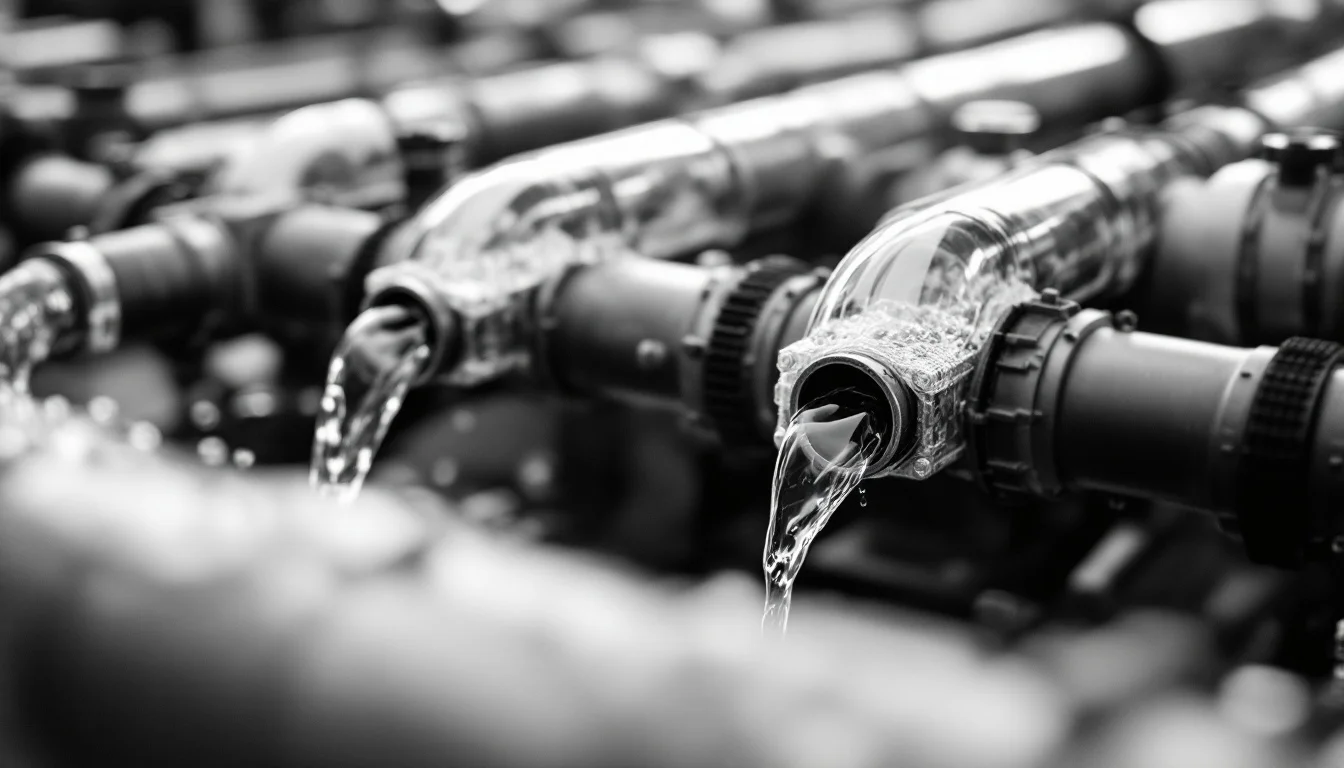
The Liquid Death campaign is a marketing stunt, but it was engineered around a real crisis. AI data centers consume enormous quantities of water — not to generate electricity, but to prevent servers from overheating. Cooling systems in hyperscale facilities typically use evaporative cooling towers that cycle through millions of gallons of potable water every day. As AI model training and inference workloads scale up globally, that water demand scales with them.
Obradovitch's comment to TechCrunch is the key signal here. Ecolab is one of the world's largest water treatment and management companies — they work directly with data center operators on cooling infrastructure. When a VP from that company says alternative water sources are already being deployed "to a similar extent," that's not a pilot program talking point. That's an acknowledgment that the industry has quietly moved past potable water as the default.
What counts as an "alternative water source" in this context? Treated wastewater — which, yes, includes processed urine — is one category. So is recycled industrial water, municipal grey water, and in some cases seawater run through desalination loops. The Kelce campaign is absurd in its framing, but the underlying engineering principle is sound: water is water, and for evaporative cooling purposes, you don't need drinking-grade purity. You need volume, thermal capacity, and manageable mineral content.
The broader context matters too. Nvidia has been publicly signaling efforts to cut data center water use, though critics note that reducing consumption per rack doesn't automatically solve the aggregate problem when total rack deployments are growing exponentially. The water crisis isn't a future risk — it's a current operational constraint for data center operators trying to site new facilities near water-stressed regions.
Why It Matters for Asia
Asia is where this problem gets genuinely acute. The region is simultaneously home to some of the world's fastest-growing AI infrastructure buildouts and some of its most severe freshwater stress zones. Southeast Asia, South Asia, and parts of East Asia are all expanding data center capacity at aggressive rates — driven by cloud adoption, AI workloads, and digital economy growth — while also facing monsoon-dependent water supplies, aging municipal infrastructure, and increasing climate volatility.
Singapore, one of Asia's most important data center hubs, has imposed capacity moratoriums and strict sustainability requirements on new facilities precisely because freshwater is a strategic national resource. The city-state imports much of its water and has invested heavily in NEWater — a high-grade reclaimed water system that processes wastewater to potable standards. The irony is that Singapore's NEWater technology is sophisticated enough to produce drinking water from wastewater, while data centers arguably need far less purity than that for cooling purposes.
India's data center market is projected to grow at double-digit rates through the decade, but major metros like Chennai, Bangalore, and Hyderabad already face seasonal water scarcity. Indonesia, Vietnam, and Malaysia are all attracting significant hyperscale investment, but each faces its own water governance challenges. For founders and developers building AI-native products in Asia, this isn't abstract environmental policy — it's a variable that will affect compute availability, latency options, and ultimately the cost structure of running inference workloads in the region.
The Kelce joke lands differently when you're building in a market where the data center your product depends on might face operational constraints because the local reservoir is running low. Alternative water sourcing for cooling isn't a quirky sustainability initiative — in Asia, it's increasingly a prerequisite for data center viability.
What This Means for Developers
Most developers don't think about cooling infrastructure. That's reasonable — it's several abstraction layers below the API call. But the water constraint on AI compute is starting to surface in ways that matter at the application layer, and developers building on AI-native development platforms in Asia should understand what's driving the underlying economics.
First, compute geography is becoming more complex. As water constraints limit where new GPU clusters can be built, the distribution of available compute shifts. Regions with access to alternative water sources — coastal areas with seawater cooling options, cities with mature wastewater recycling infrastructure, or facilities near industrial water supplies — gain a structural advantage for hosting AI workloads. Developers who assume that the cheapest or lowest-latency compute will always be in the obvious metros may find that assumption tested over the next few years.
Second, the sustainability profile of AI infrastructure is becoming a procurement consideration for enterprise customers. If you're building B2B AI products for large corporations in Asia — particularly those with ESG reporting requirements — the water footprint of your compute stack is a question you may start getting asked. Knowing whether your inference provider uses reclaimed water, seawater cooling, or potable municipal supply is the kind of operational detail that's moving from irrelevant to relevant.
Third, and most directly: efficiency matters more than it used to. Every unnecessary model call, every bloated prompt, every unoptimized inference pipeline translates into real physical resource consumption somewhere. Writing leaner AI code isn't just good engineering practice — it's a small but real contribution to reducing the water intensity of the products you ship. Techniques like prompt caching, batching inference requests, and right-sizing model selection for the task at hand all reduce compute load, which reduces cooling demand, which reduces water consumption.
None of this means developers need to become water engineers. But the mental model of AI as a purely digital, weightless medium is increasingly inaccurate. Every token generated has a physical correlate — electricity consumed, heat produced, water evaporated. The Kelce campaign, for all its absurdity, is doing something useful: making that physical reality visceral and memorable.
Key Takeaways
The Liquid Death campaign is a joke that accidentally became a case study. Here's what to carry forward:
- Alternative water sourcing is already real. Ecolab's Obradovitch confirmed that non-potable water sources are being used at scale in data center cooling today. Treated wastewater, grey water, and industrial water are all in active use. The Kelce bit is an exaggeration of something that's actually happening.
- Asia's AI infrastructure buildout has a water problem baked in. The fastest-growing AI compute markets in the region — Singapore, India, Southeast Asia — overlap significantly with water-stressed geographies. This creates real operational constraints that will shape where compute gets built and how much it costs.
- Compute geography is shifting. Water access is becoming a meaningful variable in data center siting decisions. Developers and founders should pay attention to where their compute actually lives and what physical constraints govern its availability.
- Efficiency is a sustainability lever. Leaner AI code means less compute, less heat, less cooling, less water. This is a chain worth understanding even if you're operating several layers above the infrastructure.
- The physical costs of AI are becoming visible. Water, power, land — these constraints are surfacing in policy, pricing, and public discourse. The era of treating AI compute as an infinitely scalable, consequence-free resource is ending.
The funniest part of the Liquid Death story is that the joke and the serious point are the same point: the water going into data center cooling towers doesn't need to be the same water coming out of your tap. That's a genuine engineering insight wrapped in a beer commercial. In Asia, where water scarcity and AI ambition are on a collision course, the gap between those two things is exactly where the next generation of infrastructure innovation will have to live.
```