
Musk’s faster path to more gas turbines comes with pollution problem
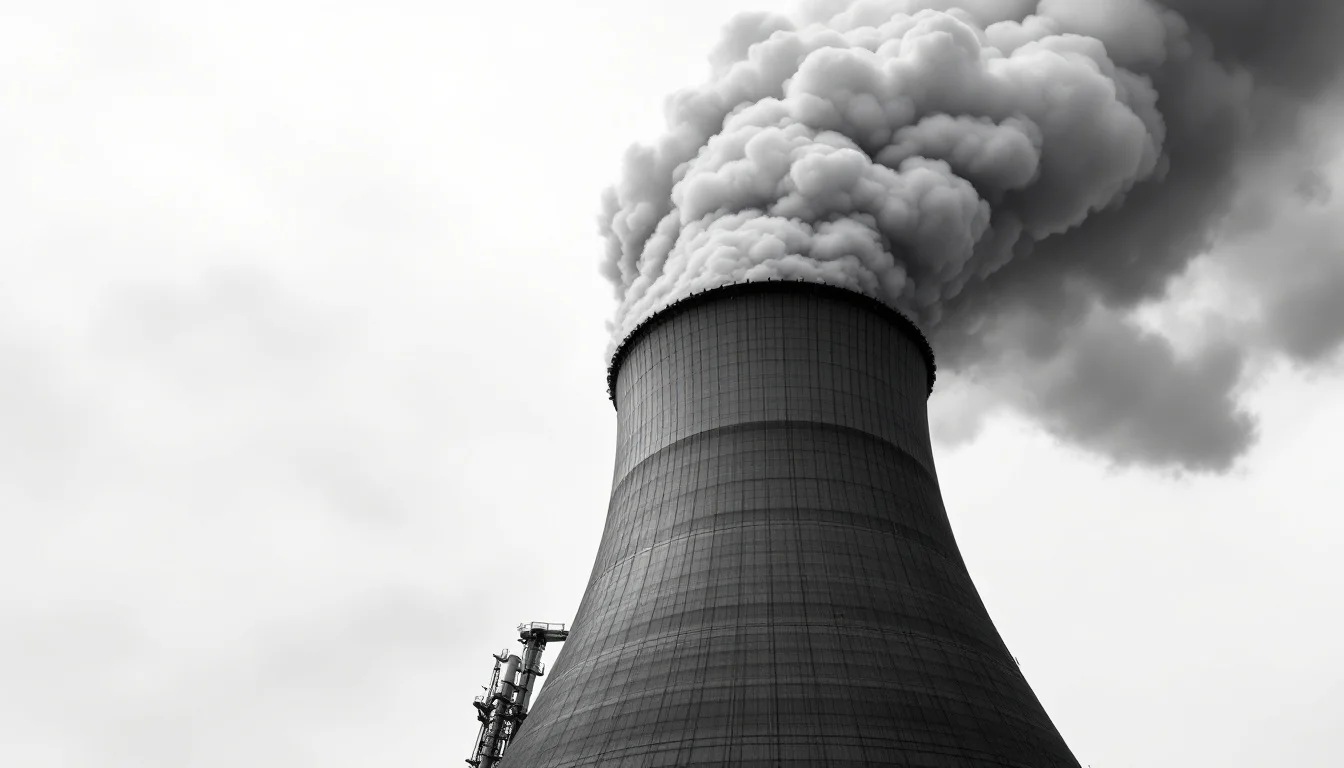
Elon Musk just revealed what a secret SpaceX foundry in Bastrop, Texas, is actually for — and it cuts straight to the heart of AI's most urgent infrastructure crisis. Musk's faster path to more gas turbines comes with a serious pollution problem, and the ripple effects stretch far beyond Texas. For

```html
Musk's Faster Path to More Gas Turbines Comes With Pollution Problem
Elon Musk just revealed what a secret SpaceX foundry in Bastrop, Texas, is actually for — and it cuts straight to the heart of AI's most urgent infrastructure crisis. Musk's faster path to more gas turbines comes with a serious pollution problem, and the ripple effects stretch far beyond Texas. For developers and founders in Asia building on AI infrastructure, this story is a preview of the energy trade-offs that will define the next decade of the industry.
What Happened
On Saturday, Elon Musk confirmed that SpaceX has been quietly constructing a turbine blade foundry near its existing Starlink factory in Bastrop, Texas. The confirmation came after TechCrunch reported that The Information had already been closing in on the story, citing job listings that explicitly referenced a "blades and vanes foundry." Due diligence specialist Corey Trinetti, who authors a detailed newsletter on AI infrastructure sites, had separately identified that SpaceX purchased roughly 830 acres near the Bastrop facility between March and June of this year.
The strategic logic is straightforward but audacious: turbine blades are among the most difficult components to manufacture in precision energy systems. They require exotic superalloys, complex casting techniques, and supply chains that are notoriously slow and globally constrained. By building a foundry in-house, Musk is betting he can collapse the procurement timeline — reportedly getting gas power online up to 18 months faster than anyone else currently can.
Musk stated that SpaceX and Tesla are each targeting 100GW per year of power generation capacity — numbers that are almost incomprehensible in scale. To put that in context, the entire United States currently generates roughly 1,200GW of total electricity capacity across all sources. Musk is talking about adding capacity equivalent to nearly a sixth of that, annually, from a single vertically integrated supply chain.
The mechanism is vertical integration applied to energy hardware — the same playbook SpaceX used with rocket components and Tesla used with battery cells. If it works, it is a genuine supply chain breakthrough. But the fuel source at the center of this plan is natural gas, and that is where the story gets complicated.
Why It Matters for Asia
Asia is not a passive observer in this story. The continent is simultaneously the world's largest AI compute market by growth rate, the largest consumer of energy, and the region most acutely exposed to the downstream consequences of fossil fuel expansion. Musk's faster path to more gas turbines comes with a pollution problem that communities near existing turbine deployments are already experiencing — lawsuits and health studies have followed gas turbine installations across the United States, and the pattern is consistent enough to be predictive.
For Asia, the parallel is direct. Countries like Vietnam, Indonesia, the Philippines, and India are all racing to build data center capacity to support AI workloads. Power availability is the binding constraint in almost every market. The temptation to reach for fast-to-deploy gas generation — especially if a Musk-style vertically integrated supply chain makes it even faster and cheaper — will be enormous for governments and hyperscalers alike.
Southeast Asia already has a complicated relationship with fossil fuel infrastructure. Coal remains dominant in Indonesia and Vietnam. Natural gas is often positioned as the "cleaner transition fuel," a framing that is technically accurate in terms of carbon intensity relative to coal, but which obscures the nitrogen oxide and particulate emissions that gas combustion produces at scale. Those emissions are not a future problem — they are a present one for communities living near power generation sites.
The Asia tech ecosystem, particularly the startup and developer layer, tends to think about energy abstractly — as a cost line item or a latency variable. This story is a reminder that AI infrastructure has a physical footprint, and that footprint has consequences for real people in real places. Founders building AI-native products need to understand that the compute they rely on is not neutral. The energy sourcing decisions being made right now by hyperscalers and infrastructure players will shape the regulatory and reputational environment for AI in Asia for the next 20 years.
Several Asian governments are already tightening data center environmental requirements. Singapore has maintained a moratorium on new data centers for years, partly due to energy concerns. Malaysia and Thailand are seeing pushback from local communities near new hyperscale campuses. The politics of AI infrastructure are becoming inseparable from the politics of energy and environment.
What This Means for Developers
If you are a developer or technical founder in Asia, the Musk turbine story might feel remote — a hardware play by a billionaire in Texas. But the decisions being made at the infrastructure layer right now are directly shaping the cost, availability, and regulatory context of the AI APIs and compute services you build on.
Here is the practical reality: the AI compute boom is straining power grids faster than renewable sources can scale to meet demand. Gas turbines — fast to deploy, dispatchable on demand, and now potentially faster to manufacture if Musk's foundry thesis works — are filling that gap. Every major cloud provider is signing long-term gas power agreements. The energy mix powering your API calls is shifting toward fossil fuels, not away from them, at least in the near term.
For developers building on MonstarX, Asia's AI-native development platform, this context matters for a few reasons. First, infrastructure cost structures are going to fluctuate as energy economics shift. Developers who build lean, efficient applications — ones that minimize unnecessary compute cycles and API calls — will be more resilient to those fluctuations than those who build wasteful systems. Prompt engineering, model selection, and caching strategies are not just performance optimizations; they are energy efficiency decisions.
Second, enterprise clients in regulated Asian markets — financial services, healthcare, government — are increasingly asking about the carbon footprint of the AI systems they deploy. If you cannot answer that question, you will lose deals. Building on infrastructure that provides visibility into energy sourcing and emissions data is becoming a competitive differentiator, not just a CSR checkbox.
Third, the speed advantage Musk is targeting — 18 months faster to power — is significant because it suggests that AI infrastructure buildout will accelerate, not slow. More compute coming online faster means more capability available to developers sooner. The constraint on what you can build is shifting from "does this model exist" to "can I build a reliable, cost-efficient, compliant product on top of it." That is a product and platform problem, and it is the problem that connectors and integration layers are designed to solve.
The developers who win in this environment are not the ones who wait for the infrastructure layer to stabilize — it will not stabilize for years. They are the ones who build on abstraction layers that insulate their products from infrastructure volatility, while staying informed enough about the underlying dynamics to make smart architectural decisions.
Key Takeaways
- Musk's SpaceX foundry in Bastrop, Texas is being built to manufacture turbine blades in-house, targeting an 18-month reduction in the time it takes to bring gas power generation online. This is vertical integration applied to AI energy infrastructure.
- The scale is extraordinary. SpaceX and Tesla are each reportedly targeting 100GW per year of power generation capacity — numbers that dwarf conventional energy project timelines and ambitions.
- The pollution problem is real and documented. Gas turbine deployments have already triggered lawsuits and health studies in communities near existing installations. Faster deployment at greater scale amplifies this risk, not just in the US but wherever this model gets replicated.
- Asia is directly in the path of this dynamic. The pressure to deploy fast, dispatchable power for AI data centers is as intense in Southeast Asia and South Asia as anywhere in the world. The Musk playbook — if it proves out — will be studied and potentially copied by Asian energy and infrastructure players.
- Developers need to think about energy. The compute you build on has a physical and environmental footprint. Understanding that footprint — and building efficiently on top of it — is becoming both a technical and a business imperative.
- Infrastructure volatility favors abstraction. When the underlying energy and compute landscape is shifting this fast, building on platforms that abstract infrastructure complexity is a rational risk management strategy, not just a convenience.
- Regulatory pressure is building in Asia. Singapore, Malaysia, Thailand, and India are all tightening data center environmental requirements. Founders who get ahead of this now will have a structural advantage in enterprise sales within 18–24 months.
The deepest tension in Musk's turbine play is one that runs through the entire AI industry right now: the technology promising to accelerate humanity's solutions to its hardest problems is, in the short term, accelerating some of those problems to power itself. That is not a reason to stop building — but it is a reason to build with eyes open, and to hold the infrastructure layer accountable for the trade-offs it is making on your behalf.
```