
Judge denies xAI’s request to block Minnesota ban on ‘nudify’ apps
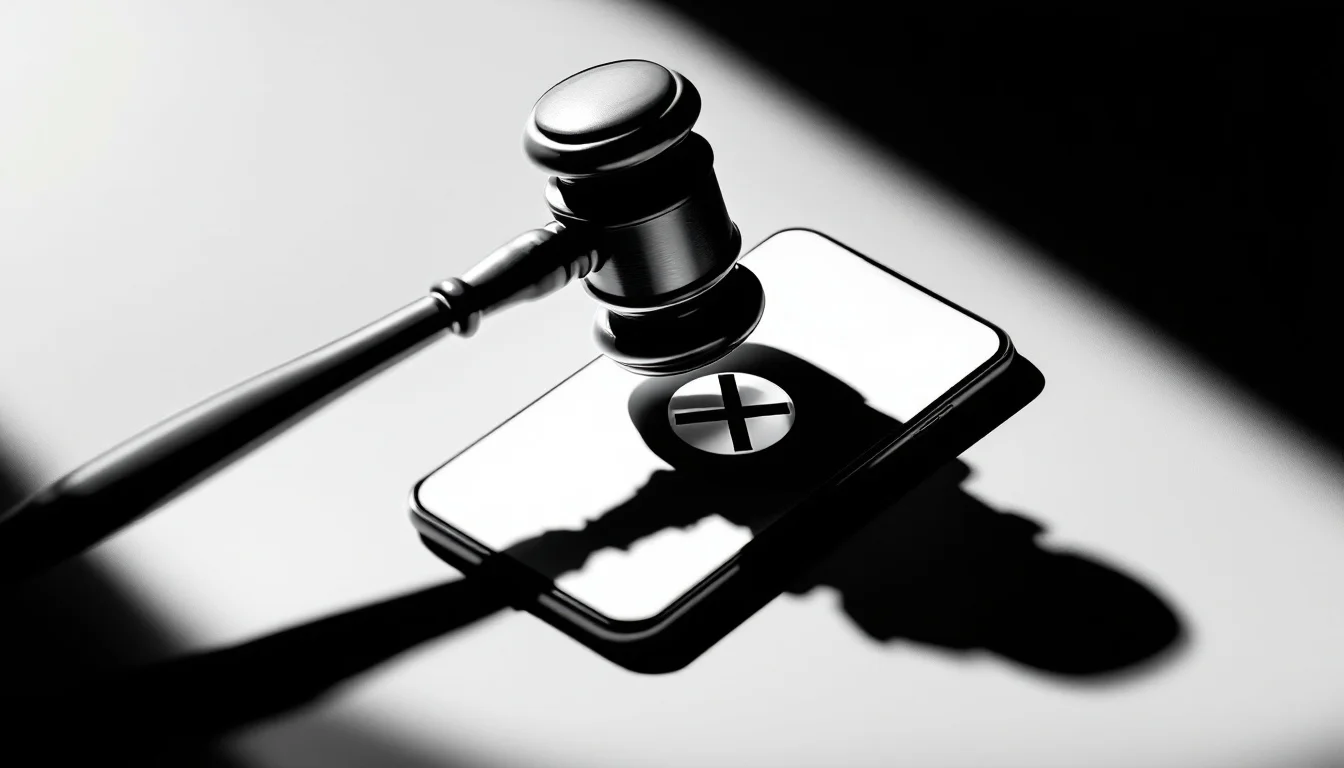
A federal judge just handed Elon Musk's AI company a significant legal setback — and the reasoning behind the ruling is as instructive as the outcome itself. On August 1, 2026, U.S. District Judge Donovan Frank denied xAI's emergency request to stop Minnesota's first-of-its-kind ban on "nudify" apps

```html
Judge denies xAI's request to block Minnesota ban on 'nudify' apps
A federal judge just handed Elon Musk's AI company a significant legal setback — and the reasoning behind the ruling is as instructive as the outcome itself. On August 1, 2026, U.S. District Judge Donovan Frank denied xAI's emergency request to stop Minnesota's first-of-its-kind ban on "nudify" apps from taking effect. The judge denied xAI's request to block Minnesota ban enforcement not because the law is obviously constitutional, but because xAI waited too long to ask for help.
For developers and founders building AI products across Asia, this case is worth watching closely. It signals a new phase in AI regulation — one where courts are scrutinizing not just the substance of AI laws, but the behavior of the companies challenging them.
What Happened
Minnesota's law banning apps that allow users to generate non-consensual "nudified" images of real people took effect August 1, 2026. xAI filed a lawsuit against the ban and simultaneously requested a temporary restraining order to block the law from taking effect while the case proceeded through the courts.
Judge Frank denied that request. His ruling, reported by TechCrunch citing NBC News, focused heavily on timing. xAI filed its emergency motion on July 29 — nearly three months after the law was signed, and just three days before it was set to take effect. Frank was direct: "Such a delay in bringing the action and the motion suggests that harm is not immediate."
That's a procedural rebuke as much as a legal one. Emergency injunctions require demonstrating imminent, irreparable harm. By waiting months to act, xAI effectively undermined its own argument that the law posed an urgent threat to its operations.
Importantly, this ruling doesn't end the lawsuit. xAI's underlying challenge — that the ban is "overinclusive" and that "there are far less restrictive alternatives that function to achieve the same ends" — still moves forward in court. What it means in practice is that Minnesota's ban is now active law while that legal fight plays out, potentially for months or years.
The backdrop matters too. Earlier in 2026, users of X (now part of SpaceX, along with xAI) used Grok to generate and flood the platform with non-consensual sexualized deepfake images. That triggered a cease-and-desist from California's attorney general and a full platform block from Indonesia. Minnesota's law is a direct legislative response to exactly that kind of harm.
Why It Matters for Asia
Asia's AI regulatory landscape is fragmenting fast, and this Minnesota case is a preview of what's coming across the region — just with different legal architectures and faster timelines.
Indonesia's response to the Grok deepfake incident was immediate and blunt: block the platform entirely. That's consistent with how Southeast Asian regulators have historically handled content violations — swift executive action rather than drawn-out litigation. But as AI products become more deeply embedded in daily life, that blunt-instrument approach is giving way to more targeted legislation, similar to what Minnesota just enacted.
South Korea already has some of the world's strictest laws on non-consensual intimate imagery, with criminal penalties that extend to distributors and platform operators. Japan revised its laws on deepfake pornography in 2024. The Philippines, Thailand, and Vietnam are all at various stages of drafting or updating digital content laws that touch AI-generated imagery. The direction of travel is unmistakable.
What makes the Minnesota case particularly relevant for Asia tech is the jurisdictional question it raises. If you're building an AI image generation product in Singapore, Jakarta, or Ho Chi Minh City, and your app is accessible to users in regulated markets, you are exposed. "We're not a US company" is not a compliance strategy. Indonesia didn't ask Grok for a legal brief before blocking it.
The xAI case also illustrates a subtler risk: regulatory arbitrage assumptions are eroding. Building a product in a jurisdiction with lighter AI oversight and distributing it globally made sense three years ago. Today, that model is under pressure from every direction — US state laws, EU AI Act enforcement, and increasingly assertive regulators across Asia-Pacific.
For founders in the region, the question isn't whether AI content laws are coming. They're already here. The question is whether your product architecture and compliance posture are ready for them.
What This Means for Developers
Let's get concrete. If you're building any AI product that involves image generation, transformation, or manipulation — whether that's a creative tool, a social app, an e-commerce feature, or anything adjacent — this case should prompt a specific set of technical and legal conversations.
First, audit your use-case boundaries. Minnesota's law targets apps that allow users to generate non-consensual nudified images. But "overinclusive" laws, as xAI argues this one is, often catch adjacent use cases in their net. If your product has any image-to-image transformation capability, understand exactly where your guardrails are and document that you have them.
Second, build compliance into your architecture, not your terms of service. A ToS clause saying "don't use this for harmful content" is not a technical control. Courts and regulators increasingly want to see that platforms have made harmful use technically difficult, not just contractually prohibited. That means content classifiers, rate limiting on sensitive transformations, and audit logging that can demonstrate enforcement.
Third, think about your model's provenance. The Grok incident happened because a general-purpose model was insufficiently constrained for a specific harmful use case. If you're integrating third-party AI models into your product — whether via API or self-hosted — you inherit some of their risk profile. Know what your model can do, not just what you intend it to do.
Fourth, monitor multi-jurisdictional exposure early. xAI's procedural problem was waiting three months after the law was signed to act. Developers building for Asian markets should be tracking legislative developments in their key markets continuously, not reactively. South Korea, Japan, Australia, and Singapore all have active AI governance processes running right now.
For teams building on MonstarX, this is exactly the kind of compliance context that should inform how you scope and architect AI features from day one — not as a retrofit after a legal notice arrives.
Fifth, don't conflate "legal in my home market" with "legal everywhere I operate." This is the most common mistake among early-stage teams. If your app is available on the App Store or Google Play globally, you are operating in every market where users can download it. That's not a hypothetical risk — Indonesia's Grok block proved that regulators will act unilaterally when they decide a product crosses a line.
Key Takeaways
The xAI-Minnesota case compresses several important lessons into a single news cycle. Here's what to carry forward:
- Timing matters in litigation. Judge Frank's denial wasn't primarily about whether Minnesota's law is constitutional. It was about the fact that xAI waited until three days before enforcement to ask for emergency relief. If you ever need to challenge a regulation, the clock starts when the law is signed — not when it takes effect.
- The underlying lawsuit continues. xAI's argument that the ban is "overinclusive" and that less restrictive alternatives exist is a legitimate First Amendment and commerce clause argument. Courts may ultimately agree. But "we might win eventually" doesn't help when the law is active and enforcement is live.
- Non-consensual AI imagery is a global regulatory flashpoint. This isn't a US-specific issue. Indonesia blocked Grok over it. California issued a cease-and-desist over it. South Korea criminalizes it. Minnesota banned the apps that enable it. The regulatory consensus is forming fast, and it's not moving in the direction of permissiveness.
- Platform liability is expanding. The era of platforms arguing they're neutral pipes for user-generated content is ending. Regulators and courts are increasingly treating AI-powered platforms as active participants in the harms their tools enable — especially when those tools are specifically designed to generate the harmful content in question.
- Asia's regulatory environment is not a safe harbor. Building in Southeast Asia doesn't insulate you from US, EU, or other jurisdictions' laws if your product is accessible there. And Asia's own regulatory frameworks are tightening independently.
The deeper pattern here is one that every AI developer in Asia should internalize: the window between "this technology exists" and "this technology is regulated" is shrinking. What took decades for social media is taking years for AI — and in some cases, months. The Minnesota ban is the first US law of its kind, but it almost certainly won't be the last, and the legal template it establishes will travel.
Building AI products responsibly isn't just an ethical position anymore. It's increasingly the only viable engineering strategy — because the alternative is building something that works perfectly until the day a regulator decides it doesn't.
```