
I tried out OpenAI’s new AI keypad — which will be fun for some coders and slightly mystifying to everyone else
OpenAI just shipped its first piece of hardware, and it's not the world-changing device you might have expected from a company that's been reshaping software development. I tried out OpenAI's new AI keypad — which will be fun for some coders and slightly mystifying to everyone else — and the verdict

```html
I tried out OpenAI's new AI keypad — which will be fun for some coders and slightly mystifying to everyone else
OpenAI just shipped its first piece of hardware, and it's not the world-changing device you might have expected from a company that's been reshaping software development. I tried out OpenAI's new AI keypad — which will be fun for some coders and slightly mystifying to everyone else — and the verdict is more nuanced than the hype suggests. For developers across Asia building on AI tooling every day, this product tells a story that goes well beyond a novelty keyboard accessory.
What Happened
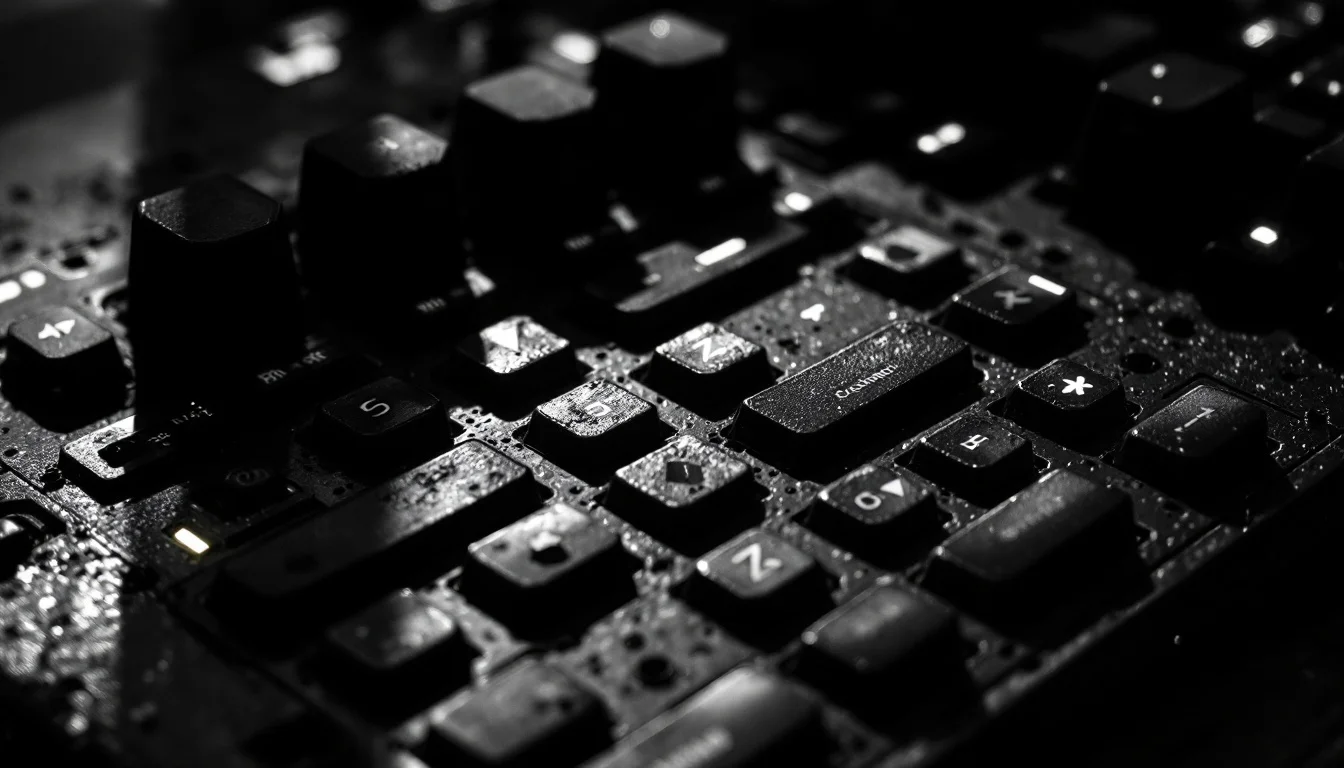
OpenAI launched Micro, a compact AI keypad developed in collaboration with specialty keyboard designer Work Louder, built to pair with ChatGPT. According to TechCrunch's hands-on review, the device is a sturdy, artisanal workplace novelty — the kind of thing that will genuinely delight keyboard enthusiasts and AI power users, while leaving most other people scratching their heads.
The reviewer notes that the first thing you notice when handling Micro is how solid it feels — dense enough that it could double as a paperweight if the AI accessory market doesn't pan out. The packaging reportedly mirrors the clean, immaculate aesthetic associated with premium consumer hardware, drawing immediate comparisons to a certain Cupertino company's product design language. That comparison isn't accidental, and it isn't without legal weight either.
OpenAI's hardware ambitions are already entangled in controversy. Apple has filed a lawsuit against the AI lab, alleging trade secret theft — a legal battle that's expected to drag on for years. Separately, reports have surfaced about another OpenAI smart home device in development: a screenless speaker designed to pair with ChatGPT, reportedly built by former Apple engineers. So Micro arrives not as a clean product launch, but as the opening move in what looks like a much larger, messier hardware strategy.
For now, Micro is what OpenAI has to show. It's a programmable keypad — clearly engineered with developers and power users in mind, the kind of people who already have strong opinions about mechanical switches and macro shortcuts. It's a niche product, deliberately so. But that niche is exactly where a lot of the most interesting AI-adjacent behavior is happening right now.
Why It Matters for Asia
At first glance, a boutique AI keypad feels like a product aimed squarely at the San Francisco tech scene — the kind of desk accessory that shows up in YouTube workspace tours alongside $400 desk mats and custom keycaps. But there's a more relevant signal here for Asia's developer ecosystem, and it's worth unpacking.
Asia is not a monolithic market. Developers in Seoul, Jakarta, Bangalore, and Tokyo have wildly different hardware preferences, price sensitivities, and workflow habits. A premium physical accessory priced for Western discretionary spending doesn't automatically translate. That said, the underlying behavior Micro is trying to encode — fast, muscle-memory access to AI capabilities — is universal. The desire to reduce friction between a developer's intent and an AI model's output is just as strong in Singapore as it is in San Francisco.
What's more telling is the signal this sends about where OpenAI sees the future of human-AI interaction. The company is betting that AI won't just live in a browser tab or a chat window — it will be embedded in the physical act of working. That's a thesis with real implications for Asia tech. The region's hardware manufacturing base, particularly in Taiwan, South Korea, and southern China, is uniquely positioned to iterate on this kind of AI-peripheral concept faster and cheaper than any Western startup could manage.
If Micro proves there's demand for dedicated AI input hardware — even among a small, enthusiastic segment — expect Asian manufacturers and startups to produce a dozen variations within 18 months. That's how Asia's hardware ecosystem has always worked: identify a validated form factor, then execute at scale and speed. OpenAI may have fired the starting gun on a category it won't end up owning.
There's also a localization angle that OpenAI hasn't addressed. A keypad optimized for English-language ChatGPT prompts is a different product from one designed for developers working in Thai, Vietnamese, or Japanese. The input modality problem for non-Latin scripts is genuinely harder, and it's a gap that regional players are better positioned to solve.
What This Means for Developers
Let's be direct: most developers don't need a physical keypad to work with AI. The real question Micro raises is about workflow design — how do you reduce the cognitive overhead of switching between your primary development environment and an AI assistant?
Right now, the dominant pattern is context-switching: you write code, hit a wall, open a chat interface, describe your problem in natural language, get a response, translate it back into your codebase, and repeat. Every one of those transitions costs time and mental energy. Micro's pitch is that a dedicated hardware shortcut collapses some of those steps. Whether a physical keypad is the right solution is debatable, but the underlying problem it's trying to solve is real and pressing.
For developers building on platforms like MonstarX, the more interesting version of this problem isn't about hardware at all — it's about how AI capabilities get surfaced at the right moment in the development workflow, without requiring the developer to break their flow. A keypad is one answer. Deeply integrated AI tooling that understands your project context is another, arguably more scalable one.
The programmable nature of Micro is where it gets genuinely interesting for technical users. A keypad with customizable macro keys that can trigger specific ChatGPT actions — running a code review prompt, generating test cases, summarizing a diff — is a legitimate productivity tool for developers who work with AI constantly. The question is whether the benefit justifies the cost and the desk real estate, particularly for developers in Asia who may be working from smaller home offices or shared co-working spaces.
There's also a broader point about hardware-software co-design. OpenAI building a physical device that's tightly coupled to its own AI models is a deliberate platform move. It's the same logic behind why companies build proprietary connectors and integrations — control the interface layer, and you influence the entire workflow. A developer who reaches for a physical Micro keypad to interact with ChatGPT is a developer who isn't reaching for a competing model. That's a retention mechanic disguised as a productivity accessory.
For Asian developers evaluating their AI tooling stack, this is a useful frame: every hardware or software choice that tightens coupling to a single AI provider is a choice that reduces optionality later. That's not necessarily wrong, but it's worth being deliberate about.
Key Takeaways
Micro is a niche product that will find a genuine audience among keyboard enthusiasts, AI power users, and developers who think carefully about their physical workspace setup. It's well-built, clearly designed with intention, and arrives at a moment when OpenAI's hardware ambitions are just beginning to take shape — and already generating legal friction with Apple.
For Asia's developer community, the product itself is less important than what it signals. OpenAI is moving to own more of the interaction surface between humans and AI models. That's a strategic bet on physical hardware at a time when most of the AI industry is focused on software. It may or may not pay off for OpenAI, but it will almost certainly inspire faster, cheaper, more localized iterations from Asian hardware makers who are watching closely.
The workflow problem Micro is trying to solve — reducing friction in AI-assisted development — is real and worth taking seriously. The solution space, however, is wide open. Physical keypads, deeply integrated development platforms, voice interfaces, and ambient AI tooling are all competing approaches. No single form factor has won yet.
A few concrete things worth keeping in mind:
- Hardware lock-in is real. A device built exclusively for ChatGPT is a commitment to OpenAI's ecosystem. Evaluate that trade-off explicitly before adopting any AI-specific peripheral.
- The localization gap is an opportunity. Micro is built for English-first workflows. Developers building AI input tools for Southeast Asian and East Asian languages have a clear opening.
- Workflow design matters more than the tool. Whether you use a keypad, a keyboard shortcut, or a platform-level integration, the goal is the same: minimize the distance between your intent and the AI's output. Optimize for that, not for the hardware.
- Watch the legal battle. Apple's lawsuit against OpenAI over alleged trade secret theft will shape how aggressively OpenAI can recruit hardware talent and how quickly it can ship subsequent devices. The outcome matters for the entire AI hardware category.
- Asia's hardware ecosystem moves fast. If Micro validates demand for AI-specific input devices, expect regional alternatives within 18 months — likely cheaper, more localized, and more aggressively spec'd.
OpenAI shipping a keypad is a small product announcement with a large subtext: the company believes the future of AI interaction isn't purely digital, and it's willing to take on Apple's legal team to pursue that bet. Whether Micro itself becomes a mainstream developer tool is almost beside the point. The more important question is what the next version of this idea looks like — and who builds it.
In a region where hardware manufacturing, software development, and AI adoption are all accelerating simultaneously, that question is going to get answered faster than most people expect.
```