
AMD takes on Nvidia with its Helios AI rack-scale system
Lisa Su walked onto a sold-out stage in San Francisco and made a direct claim: AMD's new Helios is the tech industry's "highest performance AI rack," built to train and run the most demanding frontier models in the world at massive scale. That's not a subtle positioning statement — it's a direct cha

```html
AMD Takes on Nvidia with Its Helios AI Rack-Scale System
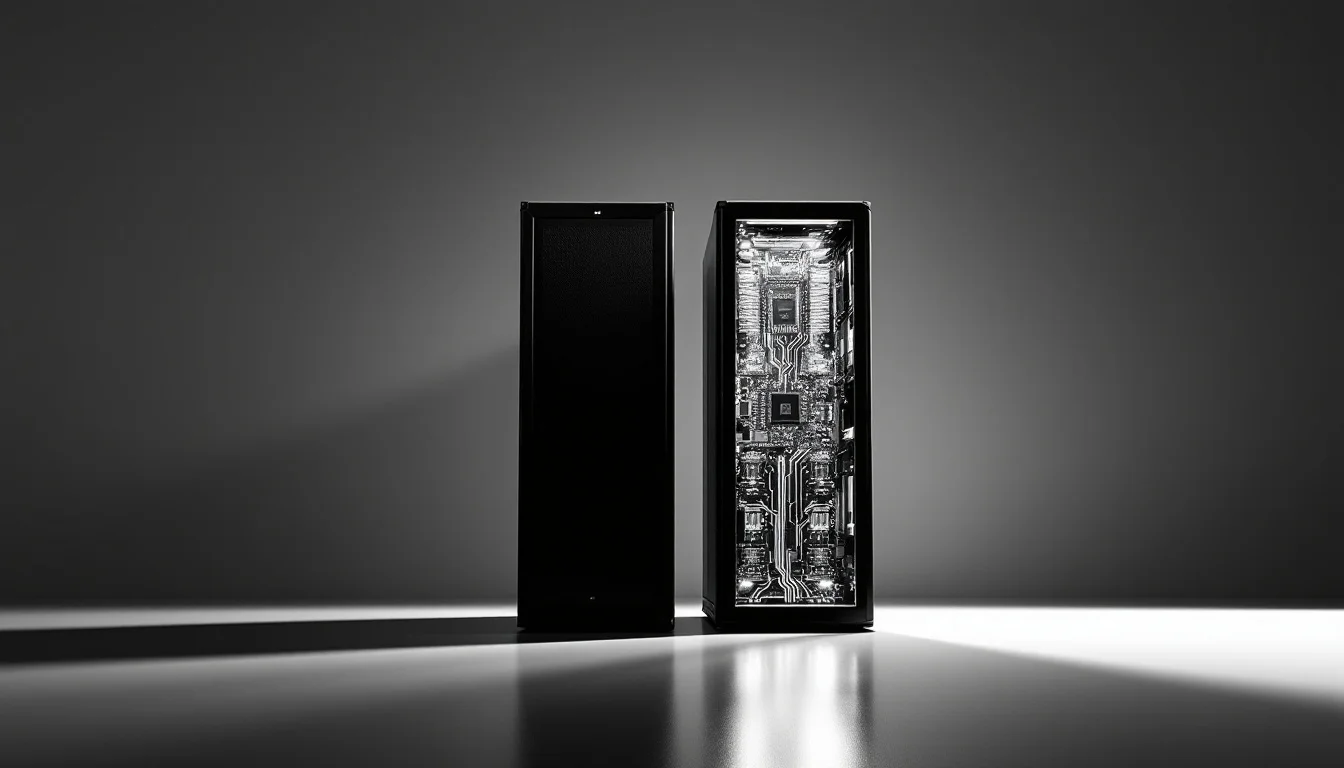
Lisa Su walked onto a sold-out stage in San Francisco and made a direct claim: AMD's new Helios is the tech industry's "highest performance AI rack," built to train and run the most demanding frontier models in the world at massive scale. That's not a subtle positioning statement — it's a direct challenge to Nvidia's grip on the data center AI market. AMD takes on Nvidia with its Helios AI rack-scale system, and the early customer list suggests this isn't just a press release — it's a genuine shift in the AI infrastructure landscape.
What Happened
At AMD's sold-out Advancing AI conference on July 23, 2026, Chair and CEO Dr. Lisa Su formally unveiled the Helios rack-scale system alongside a roster of customers that reads like the who's who of frontier AI: OpenAI, Meta, Oracle, Anthropic, and Microsoft. According to TechCrunch's coverage of the event, Microsoft CEO Satya Nadella confirmed just days earlier that Azure would expand its infrastructure with Helios deployments. Anthropic went further, announcing a strategic partnership with AMD to deploy up to two gigawatts of GPUs through the new rack system.
Helios isn't a surprise drop. AMD first revealed the system in 2025 and showed it onstage at CES 2026 in January. What's new is the shipping timeline — customers will start receiving units later this year — and the performance claims that back up Su's confidence. The Register reported that Helios beats Nvidia's Vera Rubin rack by a number of key metrics, which is significant given that Vera Rubin and Grace Blackwell have been the dominant rack-scale options for large AI labs.
Rack-scale systems matter because they combine many processors into a single high-powered unit optimized for data center workloads — training large models, running inference at scale, and handling compute-intensive pipelines that individual GPUs simply can't sustain efficiently. AMD also introduced the Venice-X CPU at the same event, a data center chip designed to complement the Helios ecosystem and handle high-performance computing workloads alongside the GPU stack.
The gigawatt-scale deployment language is worth pausing on. When AMD says Helios will be deployed at "gigawatt-scale," that's a reference to power consumption — these are systems that will draw power equivalent to small cities. The Anthropic deal alone covers up to two gigawatts. This isn't incremental hardware iteration. It's infrastructure that will define how the next generation of AI models gets trained.
Why It Matters for Asia
Asia's AI infrastructure build-out is accelerating fast. From hyperscalers in Singapore and Japan to sovereign AI initiatives in India, Indonesia, and the Gulf states, the region is in the middle of a data center construction boom. The question for every cloud provider and AI lab operating in Asia isn't whether to invest in rack-scale AI compute — it's which stack to bet on.
Until now, that answer was almost always Nvidia. The H100 and H200 GPU clusters became the default infrastructure for serious AI workloads across Asia, and Nvidia's CUDA ecosystem created a deep moat that made switching painful. Helios changes the calculus, not because it will immediately displace Nvidia in Asia, but because it gives hyperscalers and cloud providers genuine negotiating leverage and a credible alternative architecture to evaluate.
For Asian cloud providers building out their own AI infrastructure — think the major players in South Korea, Taiwan, Japan, and increasingly Southeast Asia — the fact that Microsoft Azure is adopting Helios is a strong signal. Azure is one of the most widely used cloud platforms across the region. If Helios-backed compute becomes available through Azure's Asian availability zones, developers and companies across the region will access it without needing to procure hardware directly.
There's also a supply chain angle specific to Asia. Taiwan's TSMC manufactures chips for both AMD and Nvidia, and the geopolitical complexity around advanced semiconductor supply has pushed Asian governments and enterprises to diversify their AI compute dependencies. A stronger AMD in the rack-scale market means more options, more competition on pricing, and potentially faster access to cutting-edge compute for Asian organizations that have historically been lower in Nvidia's allocation queue during supply-constrained periods.
For founders building AI products in Southeast Asia, the medium-term implication is straightforward: cloud compute costs for serious AI workloads should trend downward as real competition enters the rack-scale market. That matters enormously for startups that are currently making difficult tradeoffs between model capability and inference cost.
What This Means for Developers
Hardware competition at the rack scale eventually flows downstream to every developer who touches an API, runs a fine-tuning job, or deploys a model in production. The Helios announcement has a few concrete implications worth thinking through.
Inference costs will shift. When OpenAI, Anthropic, and Meta deploy Helios at gigawatt scale, they're building capacity that will serve API traffic. More compute capacity from a competitive hardware ecosystem means providers have more room to reduce per-token pricing. If you're building applications on top of frontier model APIs — which most developers in Asia are — this is directionally good news for your unit economics.
The ROCm ecosystem gets more serious. AMD's software stack for GPU computing, ROCm, has historically lagged CUDA in tooling maturity and community support. But when Anthropic and OpenAI commit to Helios at this scale, they're also committing engineering resources to make their training and inference pipelines work on AMD hardware. That investment tends to improve the broader ecosystem. Developers who want to run open-source models on AMD GPUs — whether on-premise or via cloud instances — will benefit from the engineering work these labs put into AMD compatibility.
Framework support will follow the hardware. PyTorch, JAX, and the broader ML toolchain follow where the serious compute goes. Watch for improved AMD support in training libraries and inference runtimes over the next 12-18 months as Helios deployments ramp up. If you're building AI-native applications on MonstarX or any other platform that sits on top of cloud infrastructure, the underlying hardware competition translates into more capable and cost-efficient foundation models to build with.
Open-source model deployment gets more accessible. One of the more interesting downstream effects of AMD's push is what it does for developers who want to self-host open-source models. As AMD GPU availability increases through cloud providers, running Llama, Mistral, or other open-weight models on AMD instances becomes more viable. For teams in Asia that need data residency compliance — a common requirement across markets like India, Japan, South Korea, and increasingly Southeast Asia — self-hosted inference on AMD cloud instances could become a practical path that wasn't available before.
The practical advice for developers right now: watch AMD's ROCm release notes, track which cloud providers announce Helios-backed instances in Asian regions, and start testing your inference workloads on AMD hardware if you have the bandwidth. Early adopters of new compute infrastructure tend to get better pricing and support.
Key Takeaways
Here's what to hold onto from the Helios announcement:
- Helios is real hardware with real customers. OpenAI, Anthropic, Meta, Oracle, and Microsoft have all committed to deployments. This isn't a roadmap slide — it ships later this year.
- The performance claims are credible. The Register's analysis indicates Helios beats Nvidia's Vera Rubin on key metrics. AMD isn't just offering an alternative; it's offering a competitive one.
- The Anthropic partnership is the most strategically significant signal. Two gigawatts of AMD GPU deployment with one of the frontier labs means AMD's software ecosystem will get serious engineering investment from a lab that runs at the cutting edge of model development.
- Azure adoption matters most for Asia. Microsoft's confirmation that Azure will expand with Helios means developers across Asia will likely access this compute through existing cloud relationships, without needing to navigate direct hardware procurement.
- Competition benefits developers, not just enterprises. Rack-scale hardware competition compresses inference costs, improves software tooling across both AMD and Nvidia ecosystems, and creates more options for teams that need geographic or regulatory flexibility in where their compute runs.
- Venice-X is worth watching too. AMD's new data center CPU, also announced at the same event, rounds out a full-stack compute play. The combination of Helios GPUs and Venice-X CPUs positions AMD as a complete data center alternative, not just a GPU vendor.
The AI infrastructure market has operated under near-monopoly conditions at the rack scale for long enough that many developers have simply stopped thinking about the hardware layer as a variable. Helios is a reminder that the stack is still being written — and that the decisions being made in San Francisco data centers this year will shape what's possible for developers building AI products across Asia for the next decade. The race for AI compute isn't over. It's just getting genuinely competitive.
```